Hands that work again — in days, not months.
Carpal tunnel and trigger finger release through a ~4 mm opening, guided by live ultrasound — right in our office, while you’re comfortably awake.
You book directly with the doctor — no “free screening,” no middleman.
Your hands are trying to tell you something
If any of these feel like your daily life, an in-office ultrasound evaluation can confirm exactly what’s going on — usually with no painful EMG nerve test.
Carpal tunnel syndrome
- Numb or tingling thumb, index & middle fingers
- Waking at night to shake your hand “awake”
- Dropping things; numbness while driving or on the phone
- Splints and injections that stopped helping
Trigger finger
- A finger that clicks, catches, or locks when you bend it
- A tender bump or pain at the base of the finger
- Stiffness that’s worst first thing in the morning
- Having to pry the finger straight with your other hand
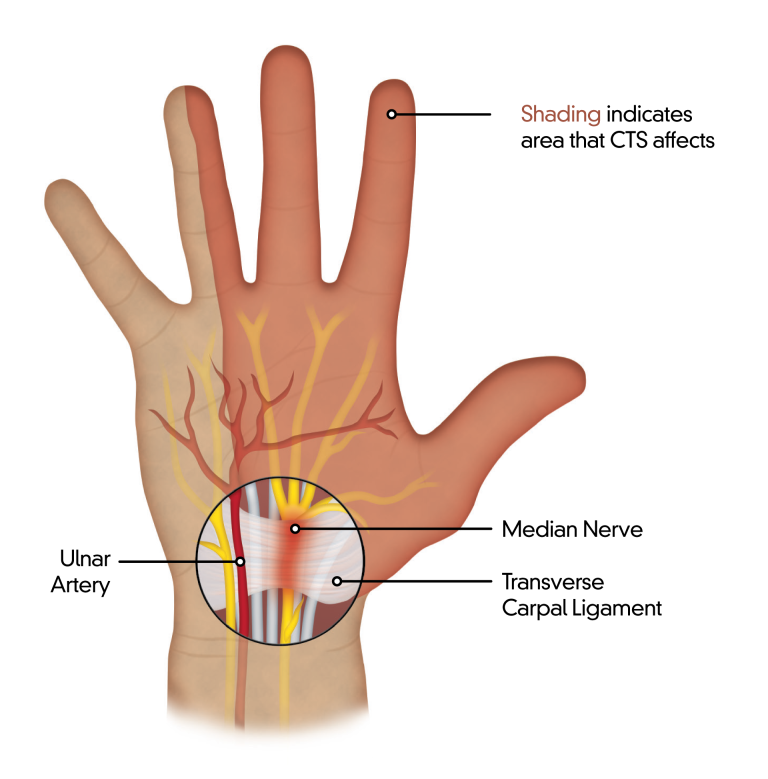
One tiny opening. Guided by live ultrasound.
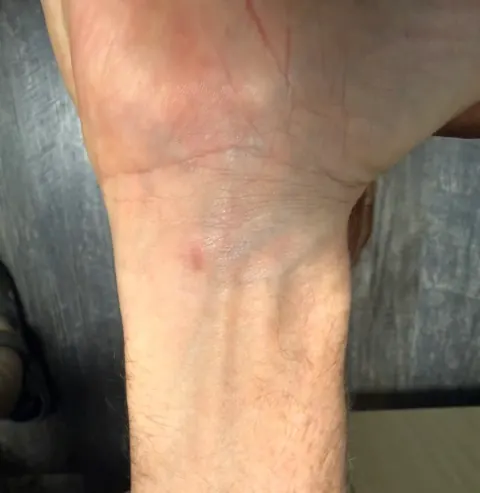
Both problems have the same kind of fix: release the one structure squeezing the nerve or catching the tendon. High-resolution ultrasound lets Dr. Morton watch the nerve, tendons, and blood vessels the entire time — and release the exact spot through a ~4 mm opening instead of an open incision.
- Diagnosed and treated with ultrasound — often no EMG needle test
- Only local numbing (WALANT) — no IV, no general anesthesia, no fasting
- Adhesive strip instead of stitches; minimal scarring & pillar pain
- In our office — no hospital or surgery-center facility fees
Watch how it works
See the procedure and what to expect. Tap to play.
Educational videos. Individual results vary — your evaluation will determine what’s right for you.
Not experimental. Proven.
Ultrasound-guided release is supported by 30+ peer-reviewed publications — including a Level-1 randomized trial where patients recovered significantly faster than with mini-open surgery.
Sources: UltraGuideCTR Clinical Summary (Sonex Health, 2025); TUTOR randomized trial; ROBUST & APEX registries. Figures pertain to ultrasound-guided carpal tunnel release; individual results vary. Read the research →
Book directly with the physician who treats you

Dr. Paul Norio Morton, MD, FAAOS
Dr. Paul Morton is a Hawaiʻi-born, board-certified and fellowship-trained orthopedic surgeon and the founder of Pacific Bone & Joint. He is passionate about ultrasound-guided carpal tunnel and trigger finger release because of what it changes for patients: a wide-awake procedure done right in the office through an opening a few millimeters wide — no hospital, no general anesthesia, usually no stitches, and most people back to daily life within days. Dr. Morton uses real-time ultrasound both to confirm the diagnosis at your first visit (often sparing you a painful EMG nerve test) and to watch and protect the nerve, tendons, and vessels throughout the release. He has built his practice around bringing this minimally invasive technique to patients across Oʻahu and the Big Island, and patients consistently describe him as compassionate, thorough, and approachable.
I think he is one of the best doctors I have ever known — very compassionate and understanding. He takes his time listening and addresses every single concern.
I had trigger finger in my right ring finger and Dr. Morton did a fantastic job. Professional, caring, and an excellent outcome. My finger is moving normally again and I couldn’t be happier. Highly recommend.
Dr Morton is the best. He did my hip replacement and carpal tunnel surgeries. I would not use anyone else.
Reviews from Dr. Morton’s patients, quoted as posted. Rating and review count across Dr. Morton’s and Pacific Bone & Joint’s Google listings. Individual results vary and are not a guarantee of outcome. Read reviews on Google.
Three steps to working hands
Evaluation
Dr. Morton confirms the diagnosis with in-office ultrasound — usually no painful EMG test.
One visit10–15 minute release
Local numbing only. You’re awake and comfortable while the ligament or pulley is released under live ultrasound.
Wide awakeBack to your life
A simple adhesive strip — usually no stitches. Most patients return to daily activities within days.*
Days, not monthsIn network with most insurance plans, including Kaiser Added Choice, and we accept workers’ comp. Typically covered by Medicare. With no operating-room facility fees, it often costs less than hospital surgery. We verify your coverage before your visit.
What patients ask us first
Will it hurt — and will I really be awake?
Yes, you’ll be awake — and comfortable. Only your hand or wrist is numbed (WALANT), like at the dentist. You may feel a brief sting from the numbing medicine and some pressure, but the area itself is numb. No IV, no sedation, no fasting beforehand.
How fast can I get back to work?
Across published studies, the median return to normal activity is 2–3 days and return to work 3–5 days — including manual laborers. Dr. Morton will give you guidance for your specific job and hand.
What does recovery look like, day by day?
Most patients follow a timeline like this. Dr. Morton will tailor it to your hand and your job.
- Procedure day: Your hand stays numb for a few hours. Rest it, keep it raised, and keep the bandage clean and dry. Over-the-counter acetaminophen or ibuprofen, if they’re safe for you, usually handles the soreness. Many patients drive themselves home; if it’s your dominant hand, you may prefer to bring a driver.
- Days 1–2: Use the hand for light everyday tasks like eating, dressing, and typing. Avoid heavy gripping and lifting.
- Days 3–5: Most people are back to work and normal daily activities. If your job involves heavy gripping or lifting, Dr. Morton may have you ease back in.
- Weeks 1–2: Soreness keeps fading. Keep the opening out of the pool, ocean, and hot tub until it has healed. Heavy lifting and sports return gradually as comfort allows.
- Weeks 2–6: Grip strength keeps improving. Night-time tingling often eases quickly, but numbness from long-standing nerve compression can take weeks to months to settle.
After trigger finger release, you can usually bend and straighten the finger right away, and moving it often helps. Some stiffness or swelling at the base of the finger can last a few weeks. We’ll see you for a follow-up visit. Call us if you notice fever, spreading redness, drainage, or pain or numbness that’s getting worse.
What are the risks?
Every procedure carries some risk, and serious complications are uncommon with this one. Possible risks include:
- Infection, bleeding, or bruising
- Tenderness or stiffness around the treated area for a few weeks, including soreness at the base of the palm after carpal tunnel release (pillar pain)
- Injury to a nearby nerve, tendon, or blood vessel
- Symptoms that don’t fully go away or that come back, which occasionally means another procedure
- A reaction to the numbing medicine, which is rare
Live ultrasound lets Dr. Morton see the nerve, tendons, and blood vessels throughout the release. If your symptoms have been severe or long-standing, numbness and strength can take months to improve and may not fully recover. Dr. Morton will review your individual risks at your evaluation.
Is it covered by my insurance?
We’re in network with most insurance plans, including Kaiser Added Choice, and the procedure is typically covered by Medicare. We also accept workers’ compensation if your hand problem is work-related. Our team verifies your plan’s coverage before your visit so you know what to expect.
Paying on your own? Call (808) 439-6201 for an estimate. If you’re uninsured or not using insurance, you also have the right to a written Good Faith Estimate.
Do I need an EMG (nerve test) first?
Usually not. High-resolution ultrasound lets us evaluate the nerve directly in the office, so most patients can skip the painful EMG needle test. If one is needed in your case, we’ll explain why.
What if injections or splints already failed me?
That’s the most common story we hear. When conservative care stops working, releasing the ligament or pulley treats the cause rather than the symptoms — and it’s often when patients are the best candidates for this procedure.
Could this work for you? Check in 60 seconds.
Ready to use your hands without pain?
Book online in a couple of taps with our secure Klara scheduler — or call and talk to our team. Evaluation first; you’ll know exactly what’s going on before anything else.
Honolulu · Waipahu/Kunia · Hilo · Kona · Mon–Fri, 8:00 am – 4:30 pm HST